Why Do Hindus Worship Nāgas?
Exploring the ancient symbolism of the Nāga through sacred geography, scripture and the philosophy of the unseen
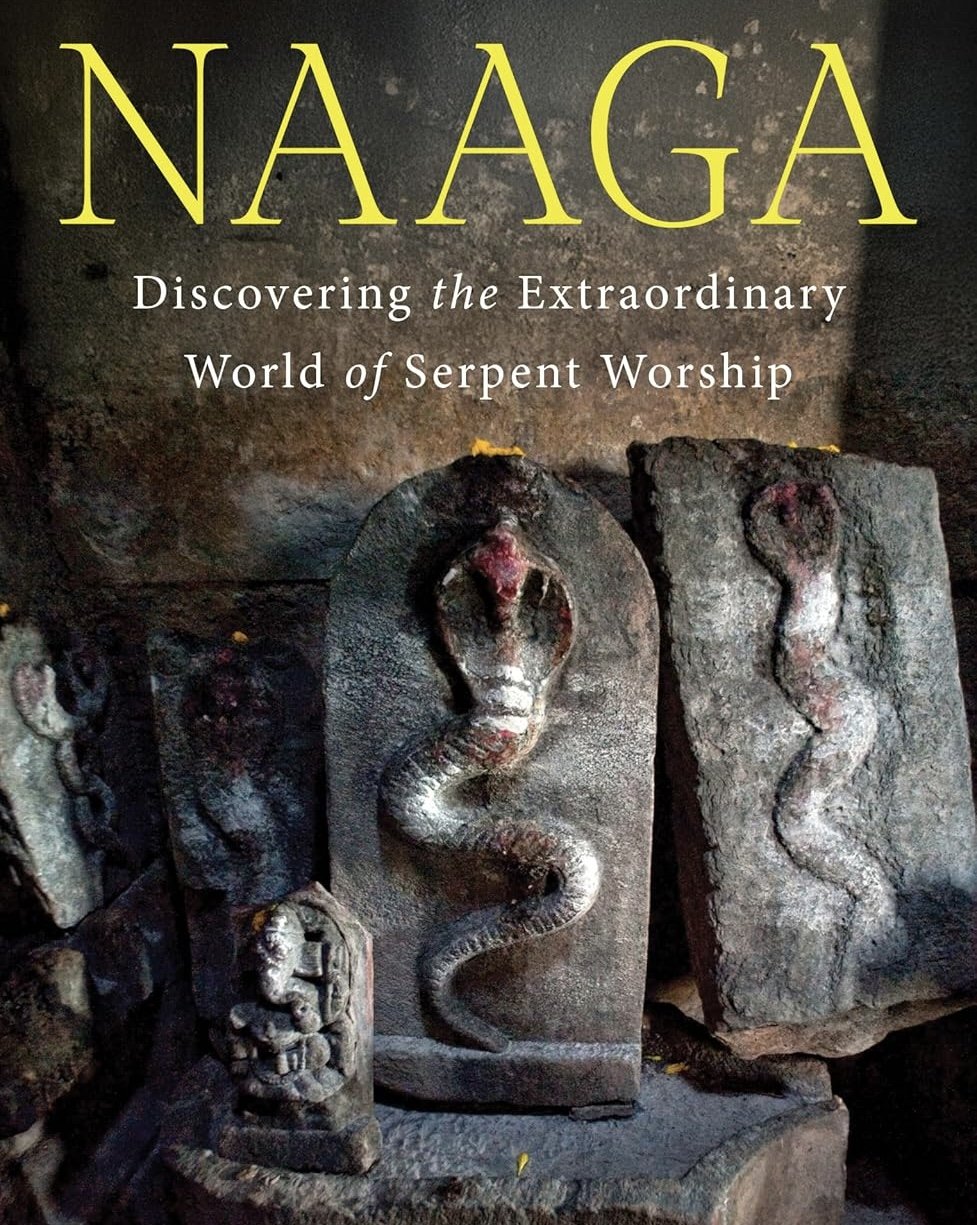
Every year on Nāga Panchami, Hindu homes and temples enact a curious reversal of one of humanity's oldest instincts. The serpent, feared for its venom and its sudden, silent appearance, is not driven away but invited into the sacred imagination. The Nāga is invoked, worshipped and offered reverence. The customary explanation is practical enough: in an agrarian civilisation, particularly during the monsoon when rainwater flooded their subterranean dwellings, snakes emerged into fields and settlements and demanded both caution and respect. Yet a civilisation does not place a creature beside its highest gods merely because it fears its bite. Viṣṇu reclines upon a Nāga. Śiva wears one upon his body. A Nāga churns the cosmic ocean. Another guards the waters. In Yoga, the most mysterious power within the human being assumes the form of a coiled serpent. Clearly, the serpent is carrying an idea far greater than itself.
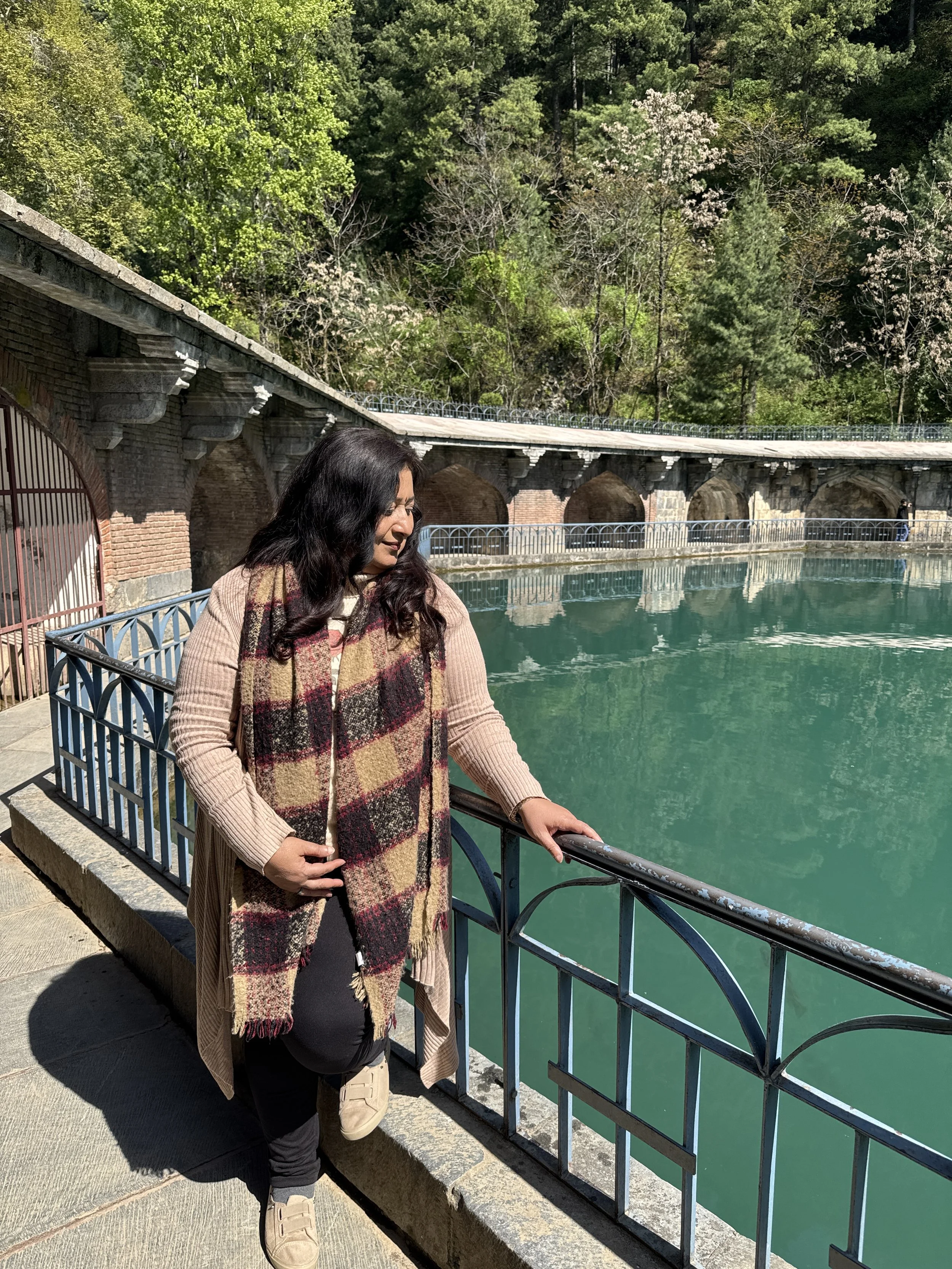
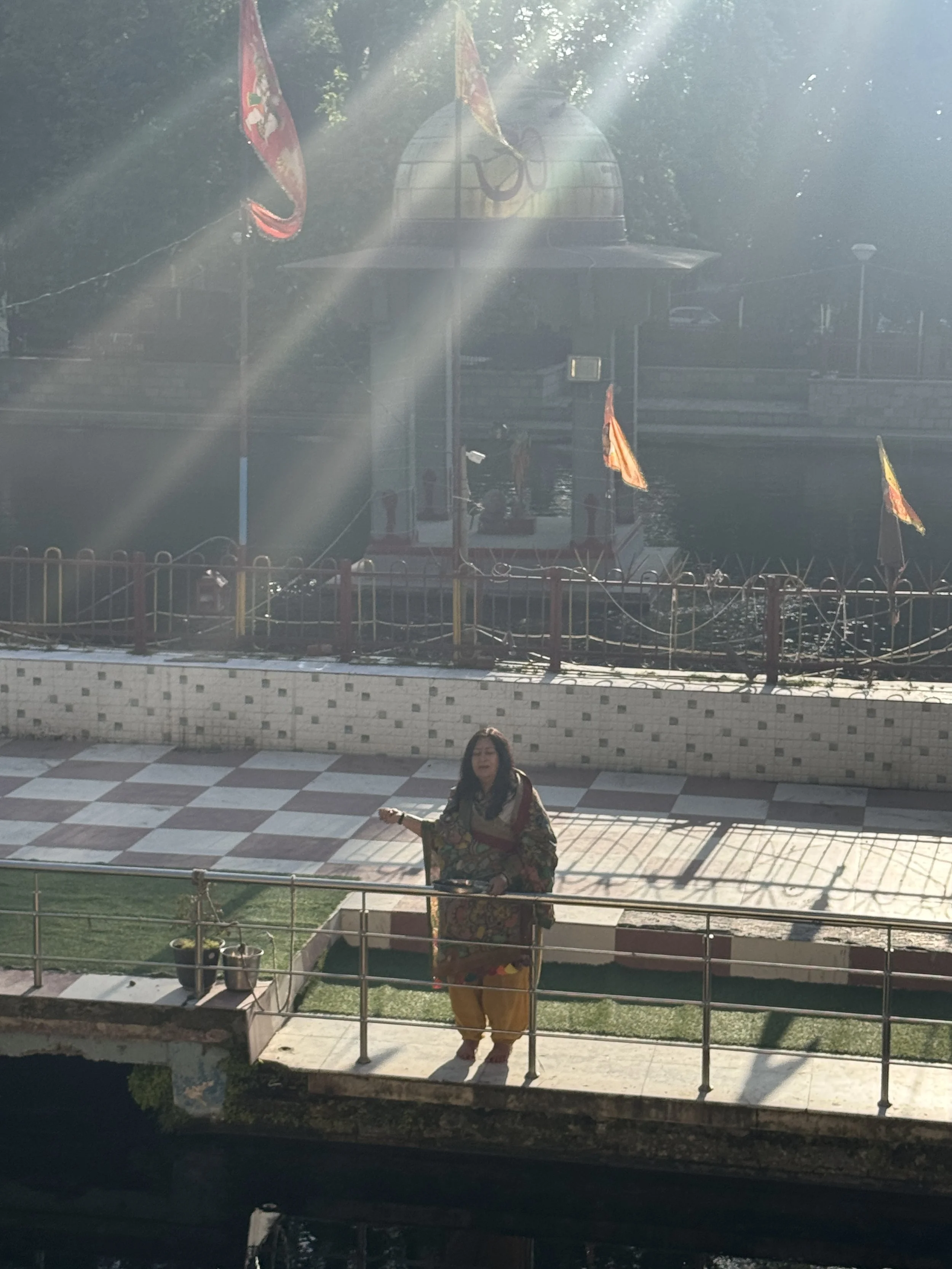
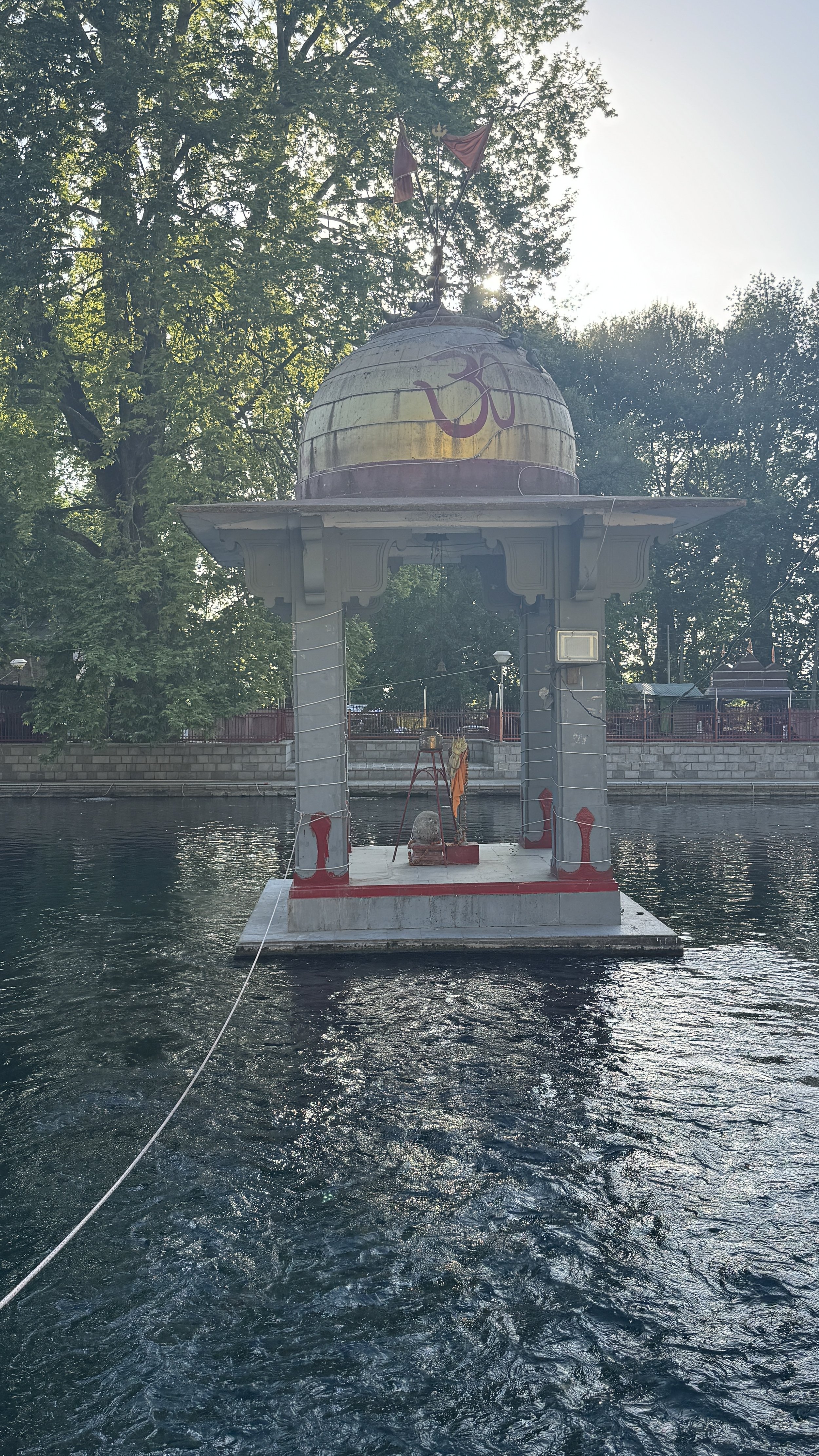
Verinag, sacred source of the Vitastā, known today as the Jhelum.
A clue to that idea survives with unusual clarity in Kashmir. During my travels through the valley, I became increasingly aware of the recurrence of one word in the names of its springs and waters: nag. Verinag. Anantnag. Sheshnag. Kokernag. In Kashmir's ancient sacred geography, Nāgas and springs are intimately connected; the Nīlamata Purāṇa, one of the foundational texts of the region, remembers the primordial valley as Satīsaras, the Lake of Satī, inhabited by Nāgas under their king Nīla, a son of Kaśyapa. The sage Kaśyapa, central to Kashmir's account of its own emergence, is also, through Kadru, the progenitor of the Nāgas. When Satīsaras had to be drained for the valley to emerge, it was Ananta who broke through the mountain barrier and released its waters. Kashmir's association between Nāga and water, then, is not a picturesque accident of language. It belongs to an ancient conception of the landscape itself.
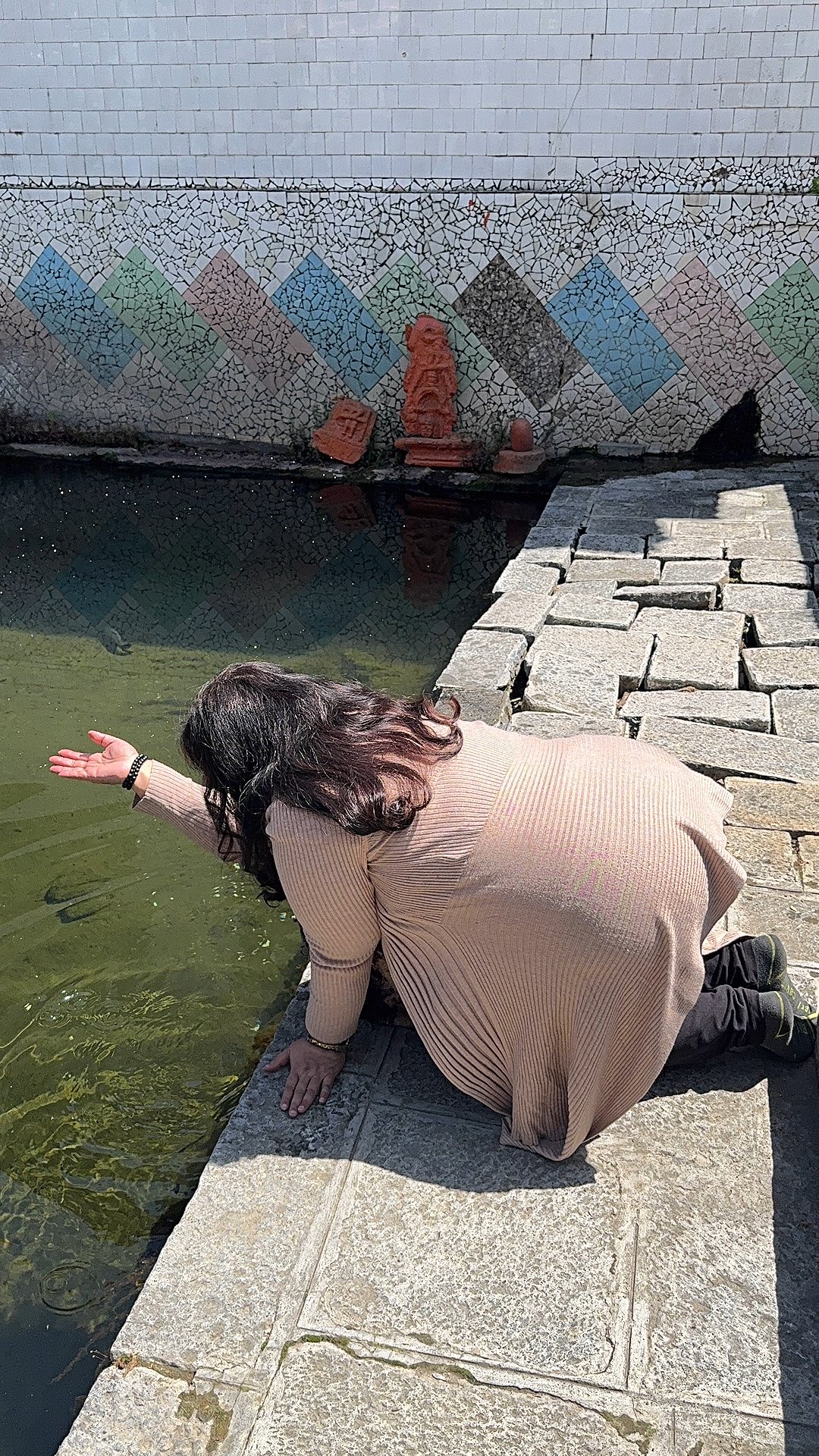
Anantnag: named after Ananta Nāga, the ancient sacred spring from which the town derives its name.
An old Kashmiri belief I encountered makes the association more intriguing still. If water is sought in a place, I was told, a little raw milk and sugar may be offered to the earth as one would make an offering to a Nāga, and water may reveal itself there. I record this as oral tradition, not scriptural injunction; yet the belief preserves an arresting correspondence. The offering is made to the earth, the Nāga is invoked, and what is expected to answer from the unseen depths is water. A spring, after all, is only the visible appearance of something whose source and passage remain concealed. The water existed before we saw it. The spring merely marks the place at which the hidden becomes manifest.
That idea takes us much closer to the Nāga of Hindu sacred thought.
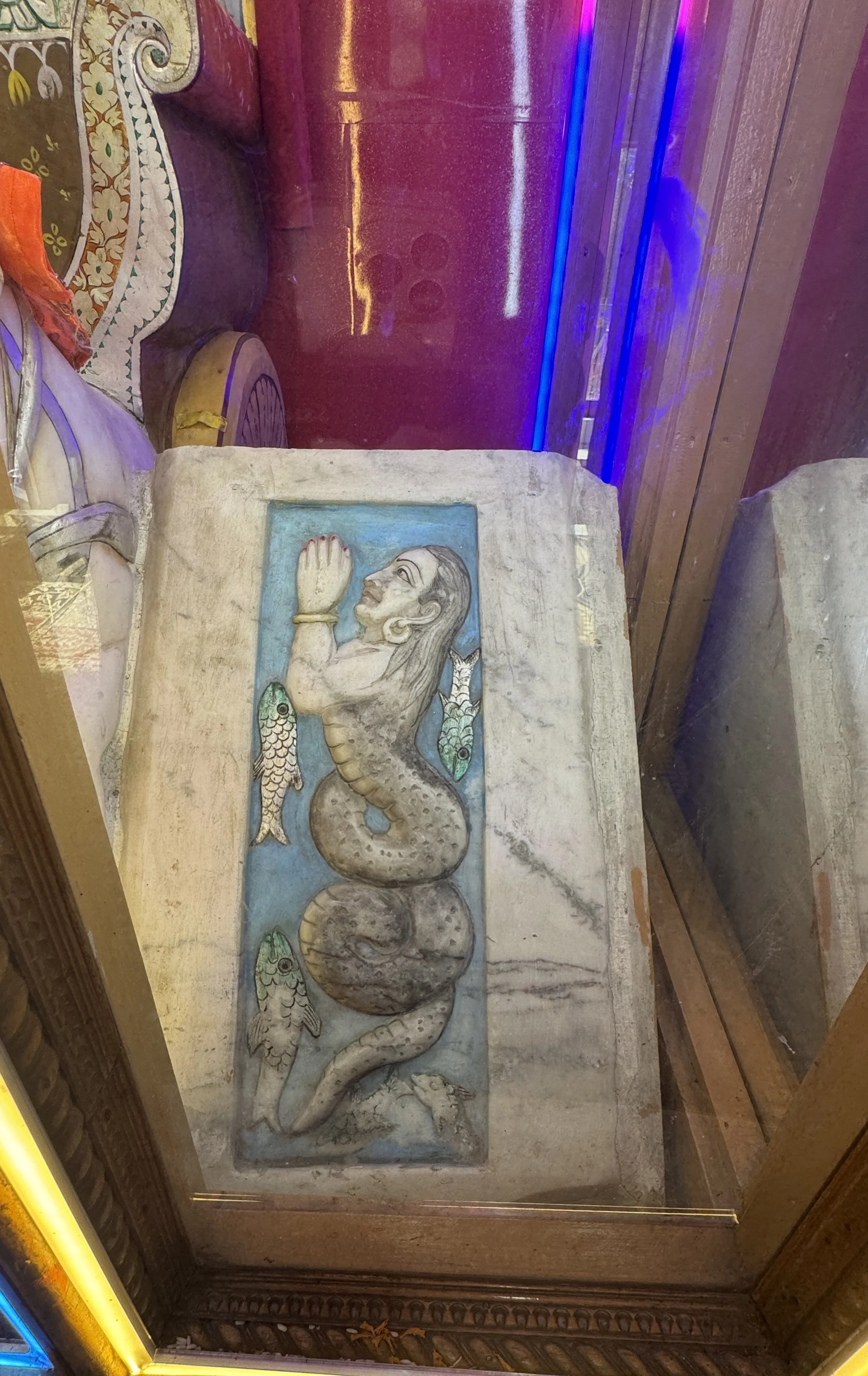
The Nāgas of the Purāṇas are not simply snakes magnified into supernatural beings. Nor should their symbolic significance be taken to mean that the traditions themselves regarded them merely as symbols. Within the sacred cosmology of the epics and Purāṇas, Nāgas constitute an order of beings in their own right; symbolism and sacred ontology are not mutually exclusive. Their characteristic domain lies beneath the visible world. They inhabit subterranean realms, are associated with Pātāla, dwell in and guard rivers, lakes and hidden waters, and are repeatedly connected with treasures concealed beneath the earth. The imagery is remarkably consistent: the Nāga belongs to depth. It inhabits what cannot ordinarily be seen.
And the treasures it guards need not be understood only as jewels.
Across sacred traditions, treasure is frequently the language used for knowledge that cannot be acquired casually. The guardian stands at the threshold because what lies beyond the threshold has value, and because access requires qualification. In the Nāga, the Hindu sacred imagination found an exceptionally potent guardian of that threshold. The serpent enters a crevice and disappears beneath the earth; it inhabits darkness without being blind to it; it protects what lies below the surface. Water, mineral wealth and treasure are its outer correspondences. At the esoteric level, the symbolism extends naturally towards concealed knowledge, latent power and realities inaccessible to ordinary perception.
The subterranean realm itself then acquires another meaning. It need not signify merely a location beneath the physical earth. In the language of spiritual inquiry, “below” and “within” repeatedly converge. What is buried is what consciousness has not yet brought to light. The human being, no less than the earth, contains strata: instinct, memory, desire, fear, inherited tendencies, dormant capacities, and depths of awareness inaccessible to the everyday mind. The descent into the hidden world is therefore also an inward movement.
It is here that the Nāga of sacred geography becomes the serpent of Yoga.
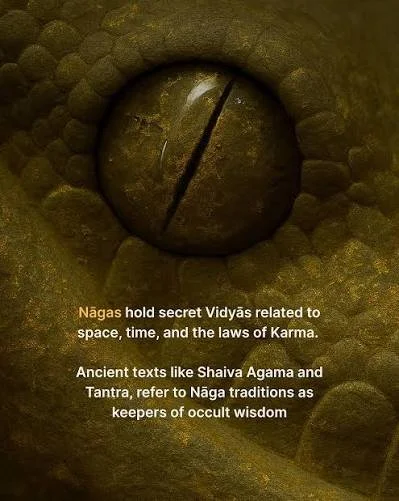
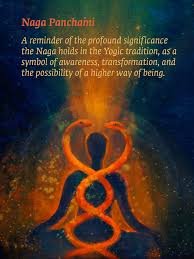
Kuṇḍalinī Śakti is described in the Tantric and yogic traditions as lying coiled at the base of the subtle body, ordinarily dormant, yet containing an immense spiritual potential. The choice of the serpent is exact. A coiled serpent is not powerless; it is power gathered into latency. Nothing in its apparent stillness reveals the speed or force of which it is capable. Kuṇḍalinī expresses precisely this paradox: what appears dormant is not absent. It is concentrated.
The parallel with the Kashmiri spring now becomes more than picturesque. Beneath the earth lies water that has not yet broken the surface; within the embodied being lies Śakti that has not yet risen into awakened consciousness. In one instance the hidden source rises through the earth; in the other, according to the subtle anatomy of Yoga, Kuṇḍalinī rises through the central channel, transforming consciousness as it ascends. Sacred geography has become sacred anatomy. The nāg beneath the landscape and the serpent within the yogic body belong to the same grammar of concealment and revelation.
This is also why awakening Kuṇḍalinī was never treated in serious traditions as a decorative metaphor for feeling “spiritual”. The serpent is powerful because awakening is powerful. What lies concealed within the human being includes illumination, but also everything that prevents illumination. The journey inward does not lead only towards serenity; it encounters attachment, fear, desire, ego and the accumulated tendencies that bind consciousness to habitual existence. Before hidden power becomes liberating, it must cease to be unconscious.
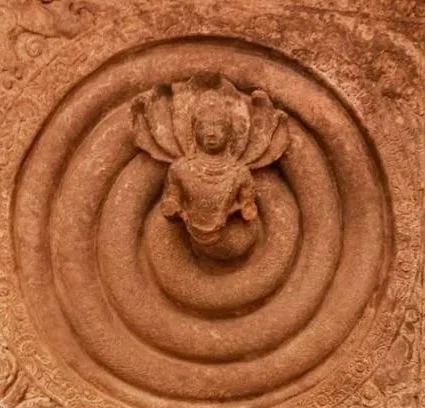
The great serpent narratives of Hinduism begin to disclose their esoteric precision at exactly this point.
Consider Vāsuki in the Samudra Manthana. Devas and Asuras take the Nāga as the rope with which they churn the cosmic ocean. They seek amṛta, the nectar of immortality, but immortality is not what the depths surrender first. The first terrible emergence is halāhala, poison powerful enough to destroy creation. Only when Śiva receives and contains that poison can the churning continue and the treasures of the ocean eventually appear, culminating in amṛta.
Read as spiritual allegory, the sequence is formidable. Churn the depths and the poison may rise before the nectar. Inner transformation does not consist merely of discovering what is luminous within us; it also brings to the surface what has remained unexamined, unresolved and potentially destructive. The poison cannot simply be returned to the depths. Nor can it be allowed to spread. It must be held by a consciousness vast enough not to be overcome by it.
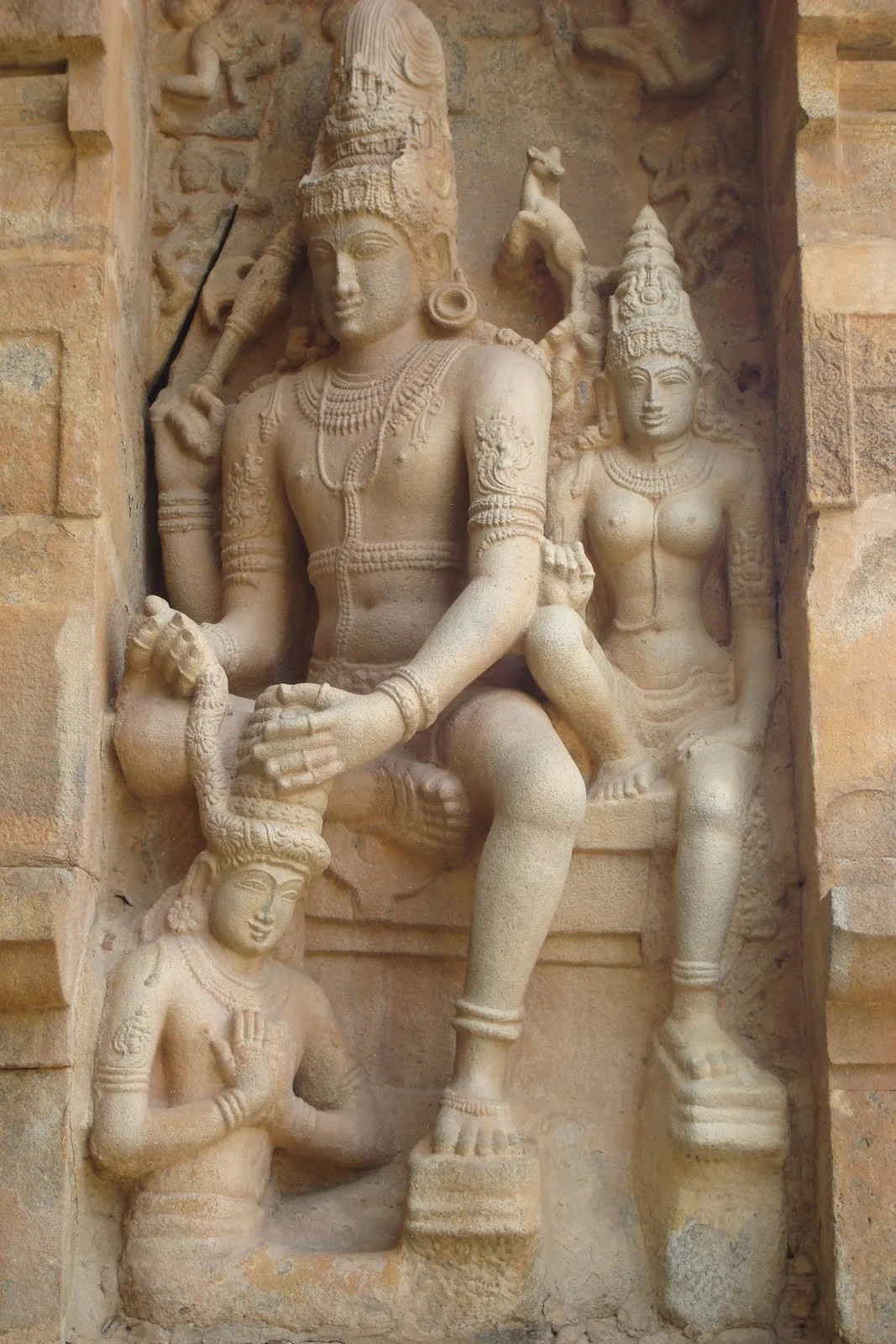
Śiva therefore does something extraordinary. He does not destroy the poison. He contains it. More precisely, he holds halāhala in his throat, neither allowing it to descend into the body nor releasing it back into creation. In yogic subtle anatomy, the throat is the seat of Viśuddha cakra, whose very name carries the sense of purification and whose domain encompasses sound, voice and expression. The correspondence is striking: poison is arrested at the centre of purification, at the threshold between what is received within and what is allowed passage into the world.
And around this same throat Śiva wears Vāsuki.
The conjunction invites a deeper reading. Poison and serpent, venom and latent power, are both present at the place of purification, yet neither governs Śiva. Halāhala is contained; Vāsuki has become an ornament. What might destroy in an unmastered state is neither denied nor annihilated, but brought into another relationship with consciousness. The symbolism is not of repression but sovereignty. Desire, instinct, fear and power remain energies; liberation lies not in their disappearance, but in their ceasing to command the one who experiences them.
Krishna's encounter with Kāliya expresses the principle differently. Kāliya has poisoned the Yamunā. Krishna does not merely survive his venom; he dances upon the serpent's hoods. Yet Kāliya is ultimately spared. Once again, destructive power is subdued rather than erased. Read symbolically, the image suggests an intuition that recurs throughout Hindu spiritual thought: mastery need not require annihilation. What is poisonous in one state may cease to poison when brought under a different order of consciousness.
And then there is Ananta Śeṣa, where serpent symbolism reaches its most metaphysical expression. The names themselves are suggestive: ananta, “without end”, and śeṣa, “remainder”, or “that which remains”. Viṣṇu reclines upon this cosmic Nāga upon the primordial waters. At the dissolution of manifested worlds, forms disappear; yet the image places the Divine upon the endless remainder. The serpent that began in the darkness beneath the earth has now entered cosmology itself. It signifies no longer merely concealed power, but continuity beneath manifestation: the mysterious remainder when transient forms have passed away.
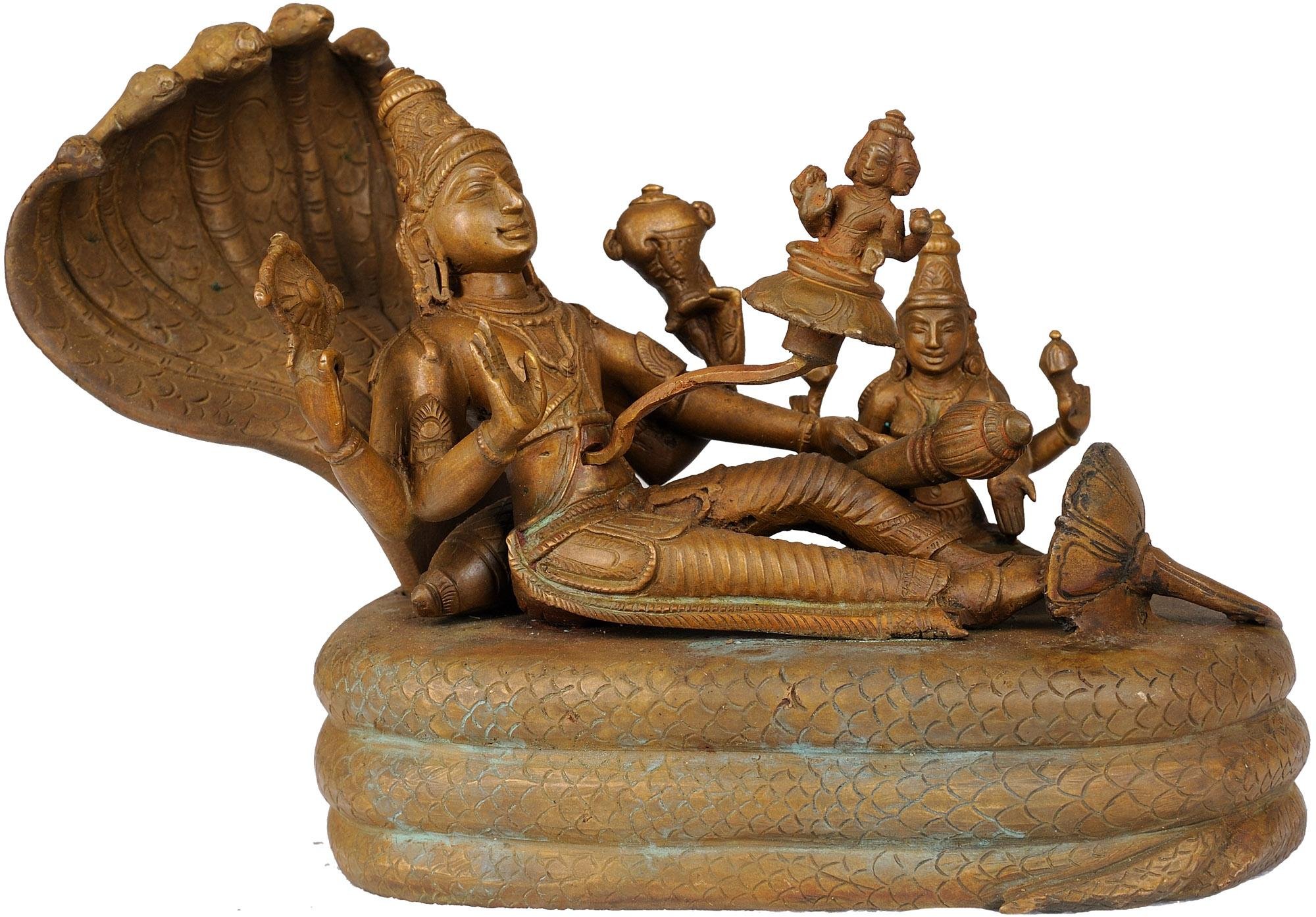
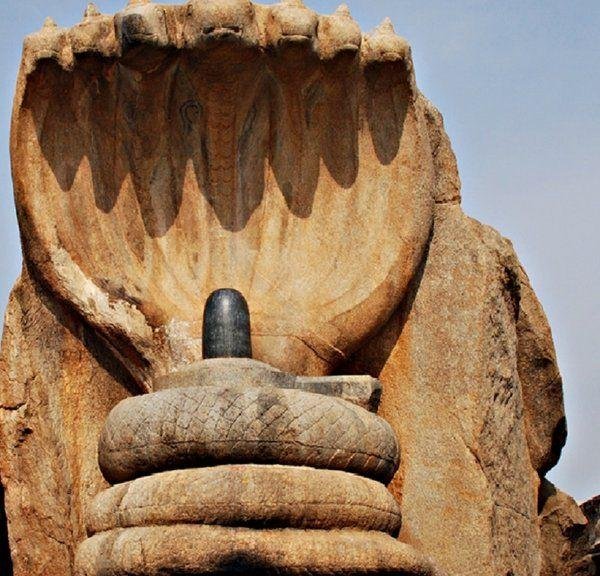
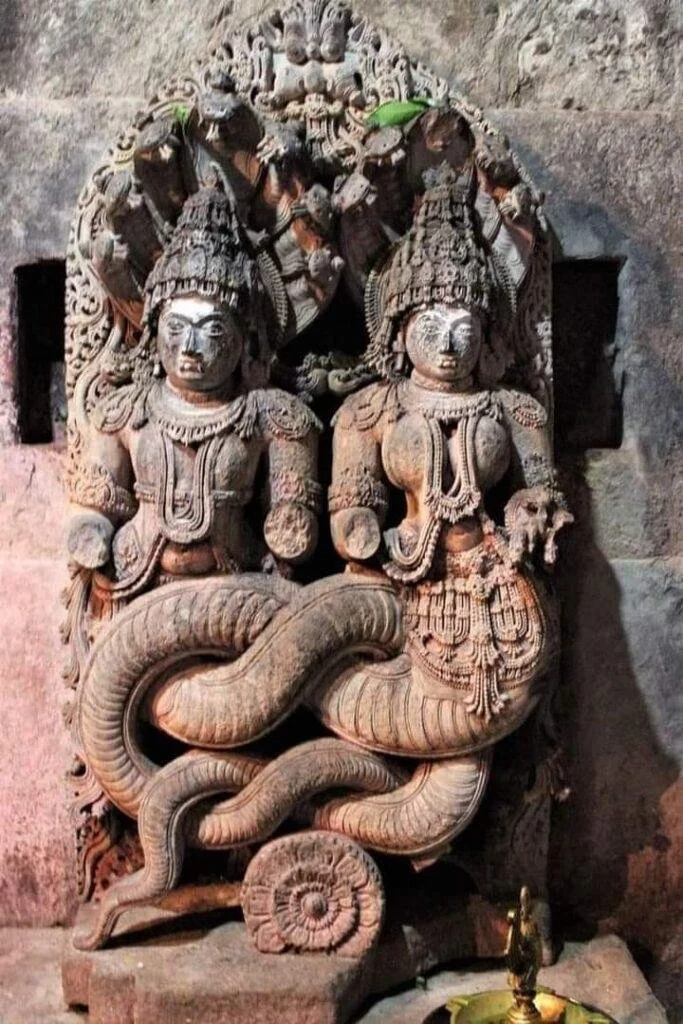
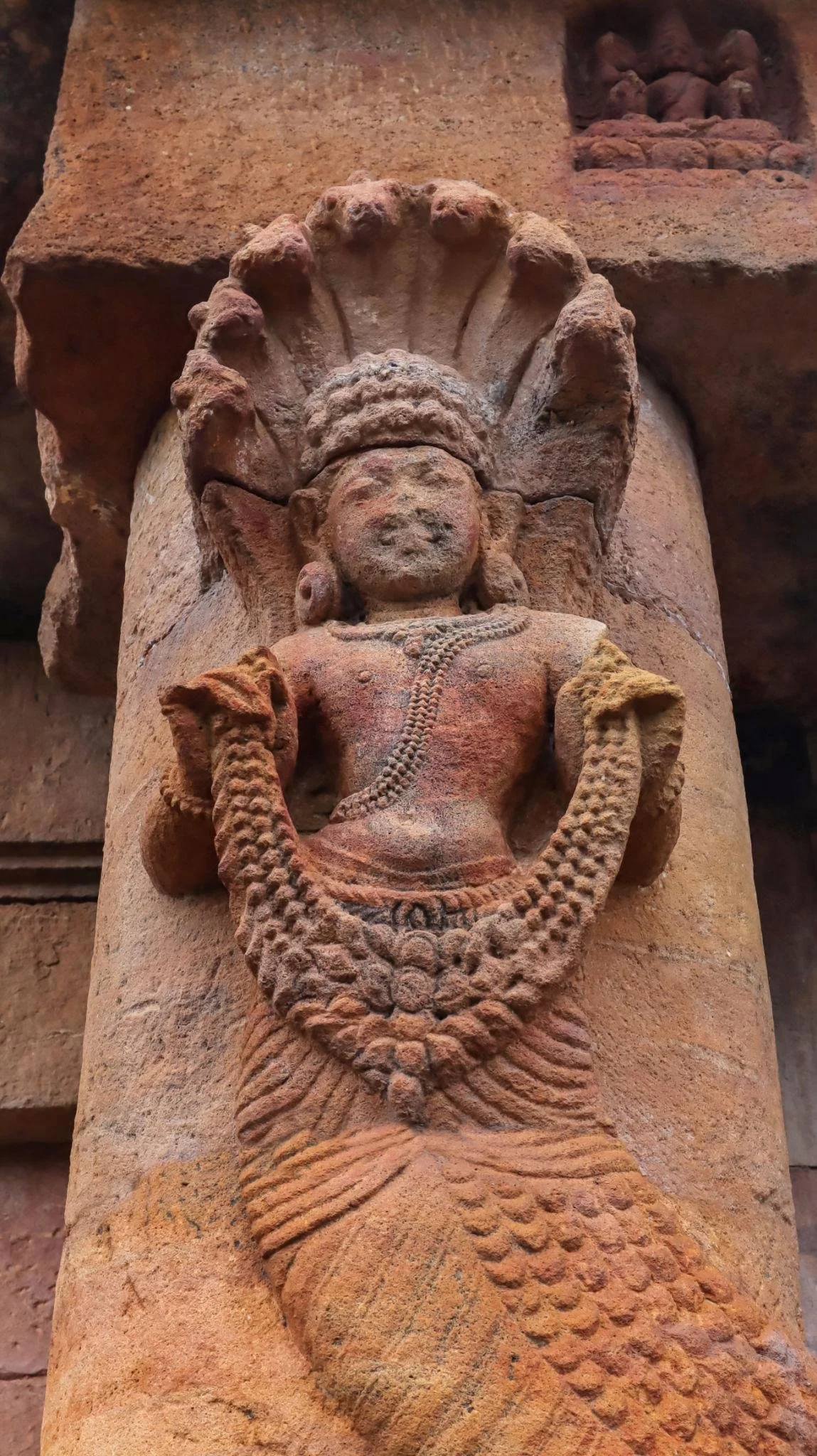
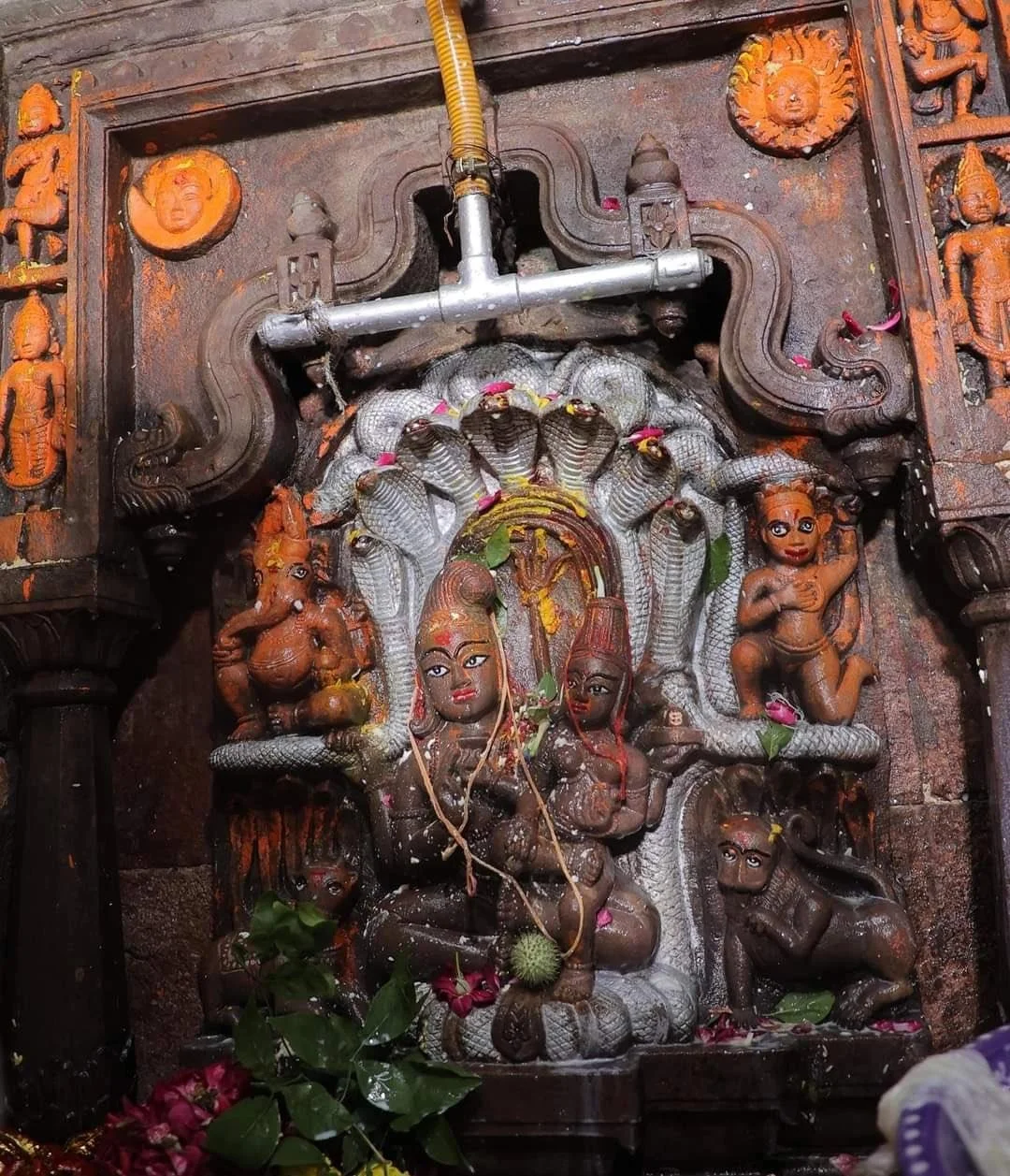
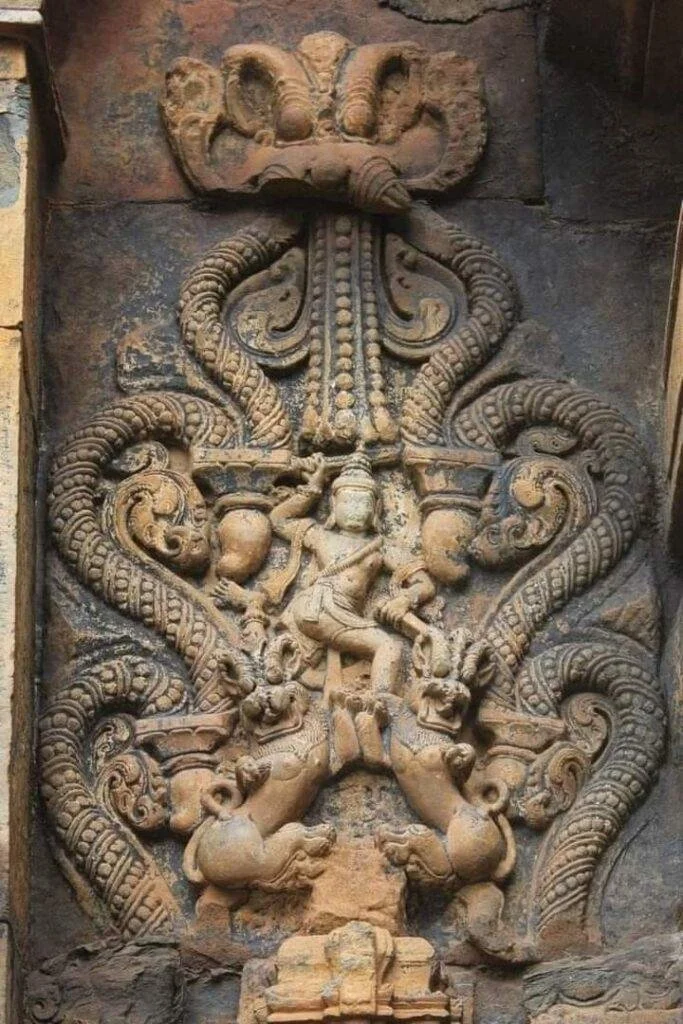
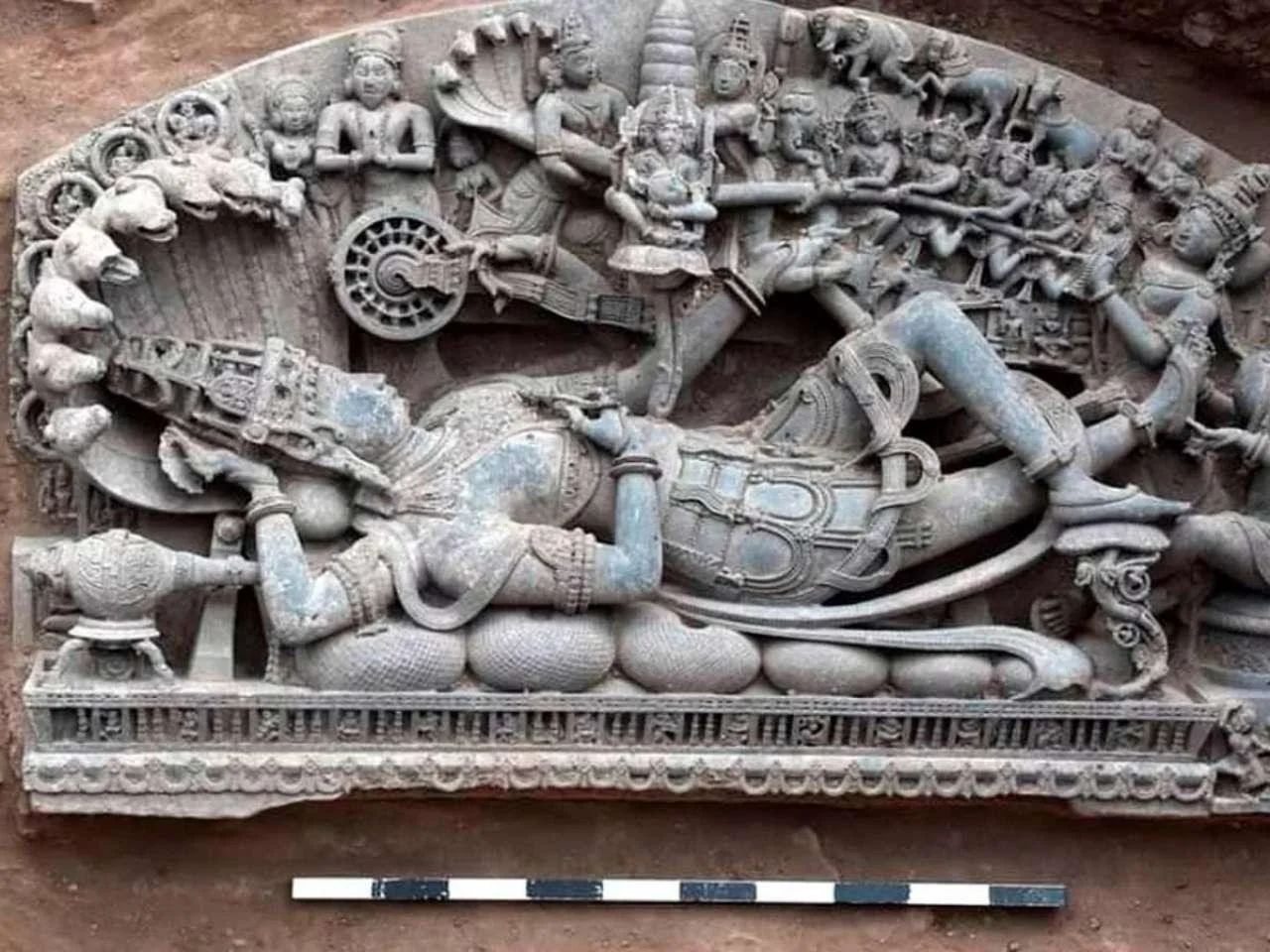
This movement, from subterranean water to Kuṇḍalinī, from poison to amṛta, from concealment to awakening, reveals why the Nāga resists any single interpretation. It belongs simultaneously to earth and consciousness, mortality and immortality, danger and wisdom. It guards treasure because treasure is hidden. It carries venom because power without mastery can destroy. It sheds its skin and appears renewed, making it a natural emblem of death overcome by transformation. It disappears beneath the earth and returns, crossing symbolically between visible and invisible worlds. Above all, it embodies potential: something immense held in reserve.
Perhaps this is why the Nāga appears so persistently at boundaries. It is a profoundly liminal being, inhabiting the uncertain territory between categories that human thought ordinarily keeps apart. It moves upon the earth yet disappears beneath it; belongs to subterranean realms yet emerges into the world of light; is associated with waters that sustain life yet carries venom capable of ending it. Ananta bears the Divine between cosmic dissolution and creation; Vāsuki becomes the instrument by which the concealed contents of the ocean are brought forth; the Nāgas of springs and subterranean realms inhabit the boundary between visible landscape and hidden depth. Again and again, the serpent occupies the place where one order of reality passes into another.
Vedānta offers another philosophical language through which to understand the pattern. The visible is not self-sufficient. Nāma-rūpa, name and form, do not constitute the ultimate ground of reality. What appears rests upon what does not appear. The spring makes visible an unseen aquifer; the body houses powers unavailable to ordinary awareness; the manifest cosmos arises from and returns to a reality that does not perish with its forms. Again and again, Indian philosophy asks consciousness to move from appearance towards source.
The Nāga stands at that threshold.
Seen in this light, Nāga Panchami is far more than the propitiation of a dangerous creature, though reverence for the living serpent remains part of its meaning. It is an acknowledgement of a hidden order of existence: not necessarily benign, but potent. What lies beyond ordinary perception may nourish, transform or overwhelm; the sacred response to such power is neither possession nor denial, but reverence.
This is why the serpent belongs beside Śiva and beneath Viṣṇu.
And this is why Kashmir's springs offer such an illuminating entrance into the mystery. The old word nag survives there at the precise point where the unseen becomes seen: where water concealed within the earth enters the world of light.
The sages of India discerned an analogous mystery within the human being. What we ordinarily call the self is likewise only partly revealed; beneath its familiar surface lie dimensions of consciousness that remain latent until encountered.
The Nāga, then, is more than an emblem of what is hidden. It is a reminder of a distinction Indian thought has returned to across its many traditions: the limits of perception are not the limits of reality.
To bow before the Nāga is, in this deeper sense, to bow before that which exists before it becomes visible, that which remains powerful before it becomes known, and that which asks of the human being not conquest, but the humility to recognise that reality extends beyond the world available to our senses.
Perhaps that is the oldest mystery the serpent guards.